Speed became the starting line
AI has widened what one person can build. Building fast is no longer enough. What matters now is turning what one person learns into the team's next decision.
Nitro is Hashed's program and community for early-stage founders who work as one team with their agents. We gather in the same pit with fellows who have raced before, show what we built, bring out the questions we're stuck on, and plan the next lap together. We finished Seoul Season 1 in the first half of 2026, and now Seoul Season 2 is lining up on the grid.



Speed is now everyone's starting line.
The race goes to the team that keeps learning.
AI has widened what one person can build. Building fast is no longer enough. What matters now is turning what one person learns into the team's next decision.
Tools and markets change every month. The question shifts from what to build to how to build a team that can rebuild anything.
When a method someone found late at night is used in a teammate's work the next morning, individual speed finally becomes team skill.
In F1 one driver moves the car, but the team wins the race. Engineers read the data, the pit crew changes tyres in seconds, and the radio shares decisions so every lap gets a little better. Now that AI has multiplied what one person can do, Hashed is holding on to the same question as it moved from Hashed Vibe Labs to Nitro: how do you turn individual speed into team skill? The racing language on this page is a vessel for that question.
No driver wins a race alone. The founder sets the direction, and people and agents split the roles. Fellows and peers look at the hard calls together. It's not the size of the team but the way it works together that changes the lap time.

Holds the wheel and finds the way by building.

Reads the next lap's decisions with you, from having raced before.
Jumps in the moment you're stuck and fixes it with you all night.
Works as a teammate and turns one person's execution into team speed.
You can join the Paddock community on Discord today and meet face to face at events. The season program selects teams separately. The tracks differ, but the question is one: does the speed one person finds become the whole team's skill?
Share what you're building and where you're stuck on Discord, and look at other builders' work.
Join the Paddock ↗Dinner nights, pop-up meetups, workshops and Game Day: places to meet in person, show your work and talk.
See events →A focused program that selects teams each season and works with them on product and market validation.
Send your team intro →Good teams listen to each other's radio. Developers, founders and investors who raced before share what they learned and where they got stuck, lightly edited from their interviews.
Knowing there were peers as deeply into AI as I was. Meeting them felt like stepping out of being alone and feeling connected.
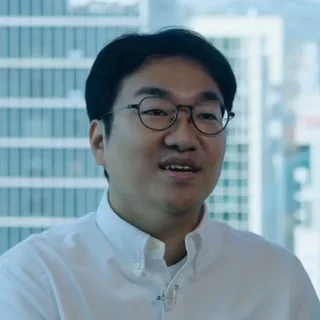 Yongho HaCEO, DataOven
We stayed up all night fixing an issue in oh-my-opencode, merged the code and I joined as a maintainer. Through Nitro I had a collaboration that otherwise wouldn't have happened.
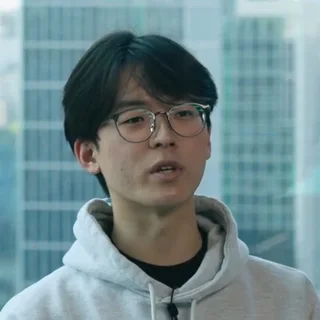 Woonggi MinOpen-source developer
The first time I vibe coded, I was absorbed for 20 hours. Seeing an app that felt like a real service come together made me think about what kinds of startups will appear and how investing and business need to change.
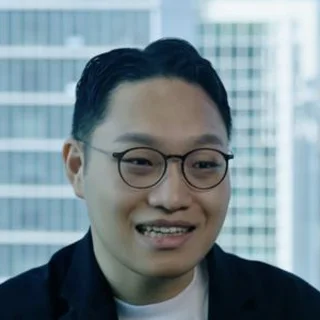 Hojin KimCEO, Hashed Open Finance · ShardLab
I think there's a limit to the advice and help a VC can give. What we can offer is a wider view that isn't tied to one company, plus context and a network.
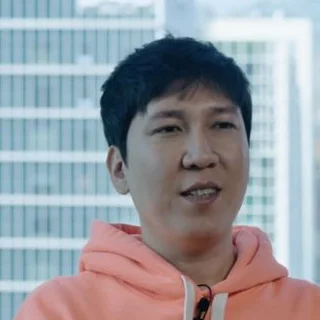 Simon KimCEO, Hashed
I hope a culture takes root where good people gather, think deeply and help each other. I want to respect and cheer when someone else does well, and build good things together.
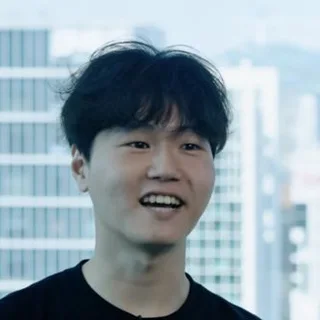 Yeongyu KimOpen-source developer
Builders are the people who actively apply AI and new tech even without an answer key or a playbook. That attitude of going past the limits others assume is the strength of Korean builders.
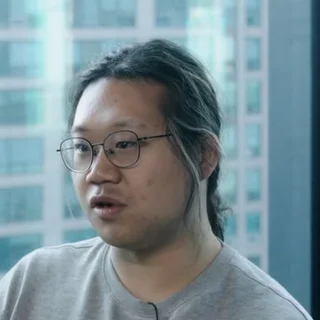 Jinhyung ParkEngineer, Sionic AI
I think all kinds of real-world businesses will start to be built on top of AI models. It's still the starting point of a new field, and the next two years will be truly interesting.
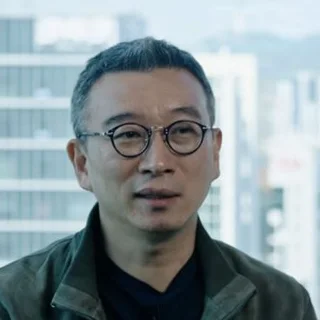 Chester RohCEO, B*Factory
I got messages asking about the challenges of AI-native companies and the next role of VCs. It showed me people are already thinking about the coming AI-native era.
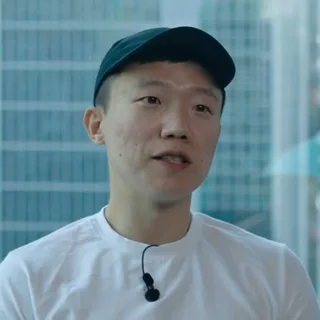 Minsu KimCEO, Contexts.io
In Jeju I learned how to turn the ideas in my head into reality faster. After building things myself, writing code no longer scares me.
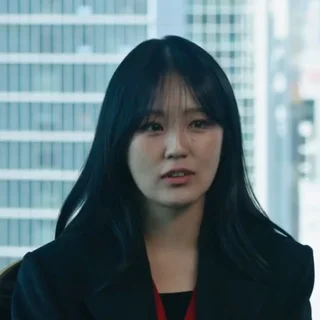 Hyeri LeeCEO, HEART OF MATTER
Early-stage founders and teams redesigning how they work around agentic workflows. We don't count heads. A solo founder can build a strong team with people and agents.
They design how people and agents work together themselves, and refine it every week.
A method one person finds is put to use in someone else's work right away.
Who owns what, and how, is clear, so each person's execution adds up to solving shared problems.
They connect fast execution to customer understanding and real revenue, and learn again from there.
It's not a relationship that ends after one event. You bring a problem you're really stuck on, meet people who've been down that road, and decide the next race together.
Not a story for a pitch, but the problem you truly want advice on right now.
Share ways of working and trial and error with founders, engineers and experts who've been there.
The experienced and the quick-on-new-tools both learn from each other.
Hashed opens the start, and it grows into a community where participants propose the next meetup and experiment.
The pit wall doesn't race for you. We look at the products and code you built, and add experience and perspective where you're stuck. We only write what we can promise; specific scope and terms are announced officially each season.
We open your product and code together, check the decision you're stuck on, and narrow down the next question to test.
Talk with developers, founders and investors with different backgrounds, from product challenges to questions about building and fundraising.
Meetups continue on Discord through dinner nights, pop-ups and workshops, toward a community built by the people who contribute.
Nitro Seoul Season 1 ran for eight weeks in the first half of 2026, from 2026-03-03 to 2026-04-24. At Game Day on 2026-04-30, the four teams that finished the season unveiled their products, joined by more than 20 fellows.
Where potential applicants, the Hashed team and builders first met.
The season's build started.
About eight weeks of focused building wrapped up.
Four teams unveiled their products on stage.
A location-based running game where you expand and compete for territory with the routes you run.
They shared how they were building before the app even launched. After launch they kept sharing updates and fun stories from users, and grew without spending on ads.
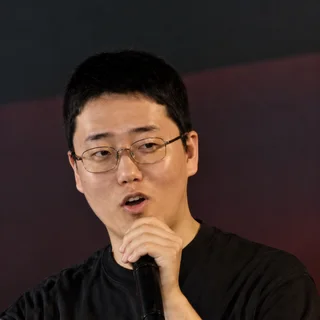 Jungwoo Ahn · How do you design a game that makes people want to keep running?
A service that analyzes how brands appear in AI search and answers, and helps them get discovered.
Hashed Venture Fund IIIAfter Seoul Season 1, this led to an investment from Hashed Venture Fund III.
We explain a little and show a lot of data. That's why customers came to trust us.
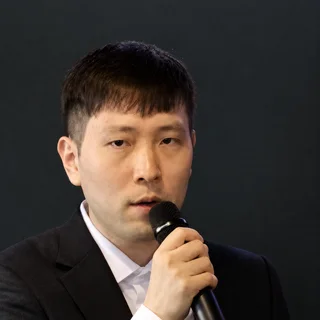 Jaehong Lee · When AI gives the answers, how do brands get discovered?
A service for creating conversations and stories built on AI characters and their worlds.
At first we put in every feature we could think of. After launch we realized we were giving too much information, improved the UX and rebuilt the service.
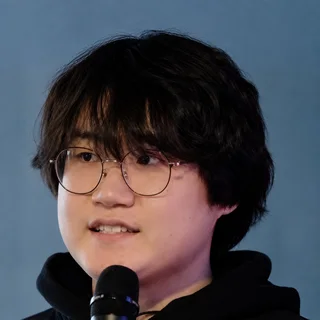 Junghwan Park · How far can a conversation with an AI character become a story?
An open-source Generative UI protocol that helps AI agents build the right screen for the moment.
Even a request to greet the user has no fixed answer. It depends on whether they're a child or an expert. Generative UI has to fit the context, actually work, and be real time.
 Wanseop Lim · If agents build the screen themselves, how will interfaces change?
Fellows are Nitro's pit crew. People who have founded companies, written code, invested, and solved brand and legal problems sit next to the teams and look at the same problems with them.
They come to look at the work with you, not to score it. Where you're stuck right now, they share the judgment of someone who has actually done it.
Founders, engineers, investors, lawyers and brand experts. From product design to fundraising and contracts, you can ask at one table.
The experienced and the quick-on-new-tools both learn from each other. A fellow's question sometimes becomes a team's next experiment.
We plan to carry Season 2's questions forward in the Paddock with the fellows from Seoul Season 1.
Works on AI agent products and growth.
Runs NFTBank, backed by Hashed, Sequoia, DCG and 1kx. Building fair-value algorithms for on-chain assets, aiming to be the Bloomberg Terminal of the NFT market.
Serial founder and investor with two exits. Alongside investing, he builds Web3 and AI projects himself, such as ETHval, Agenlinter and Promptguard.
Created oh-my-opencode, an open-source agent orchestration project, and runs a global coding-agent community.
Builds new infrastructure where decentralized and traditional finance meet, working with many protocols to bring on-chain financial services to the mainstream.
Founded Tatter & Company (acquired by Google) and 5Rocks (acquired by Tapjoy), exiting twice. Now leads Bfactory and reads the agent era's currents from the front line on AI Frontier.
A core contributor to global open source such as the Vercel AI SDK and vLLM. An engineer who has proven LLM inference efficiency and serving optimization in code.
Runs Instruct.KR, an AI engineering community growing Korea's AI developer ecosystem. A hands-on engineer who uses Claude Code deeply.
An award-winning creative director at Cannes Lions. Brings a sense honed in branding and communication strategy to new forms of expression in the AI era.
A data scientist active on the on-chain data platform Dune, and an AI developer who turns complex blockchain data into insight.
A lawyer and tax accountant with a physics degree from POSTECH. Author of the Startup Legal Guide and the Investment Contract Guidebook, he points out what founding teams easily miss in flips, M&A and investment contracts.
An open-source developer focused on developer productivity, building tools that automate repetitive, grinding work.
Founded an AI investment insight platform drawing on his Wall Street trading experience. Author of Insider Insight.
CEO of a GEO/AEO startup optimizing LLM search results. Defining the new SEO of the AI era: how brands show up in AI answers.
Leads HEART OF MATTER, a brand design and consulting studio. She starts by asking what a product believes, then carries that answer into its name, screens and voice.
A researcher who built first-generation zero-knowledge rollups. Now building a Generative UI protocol where agents draw the right screen for the moment.
Runs a group of growth hacking experts. Designed growth strategies for many startups at Samsung C-Lab and Kakao Ventures.
Built CryptoQuant, an on-chain data analytics platform whose analysis traders worldwide rely on. Also co-founded unbias.fyi.
A serial founder who exited two ML startups. Helps shape national AI policy on the Presidential Committee on AI Strategy.
A security expert who founded the hacker group WOWHACKER and the company SEWORKS. Designs defense from an attacker's point of view.
A next-generation developer actively contributing to open source, and our youngest fellow. Shows a builder culture where skill counts more than age.
Korean name order · as of Seoul Season 1
Some problems that won't untangle over a screen come loose when you sit across from each other. At dinner nights, pop-ups and workshops we open up what we've built and bring out the questions we're stuck on. The next meetup is Nitro Track Day on October 22. Later dates will be shared first on Discord as they're confirmed.
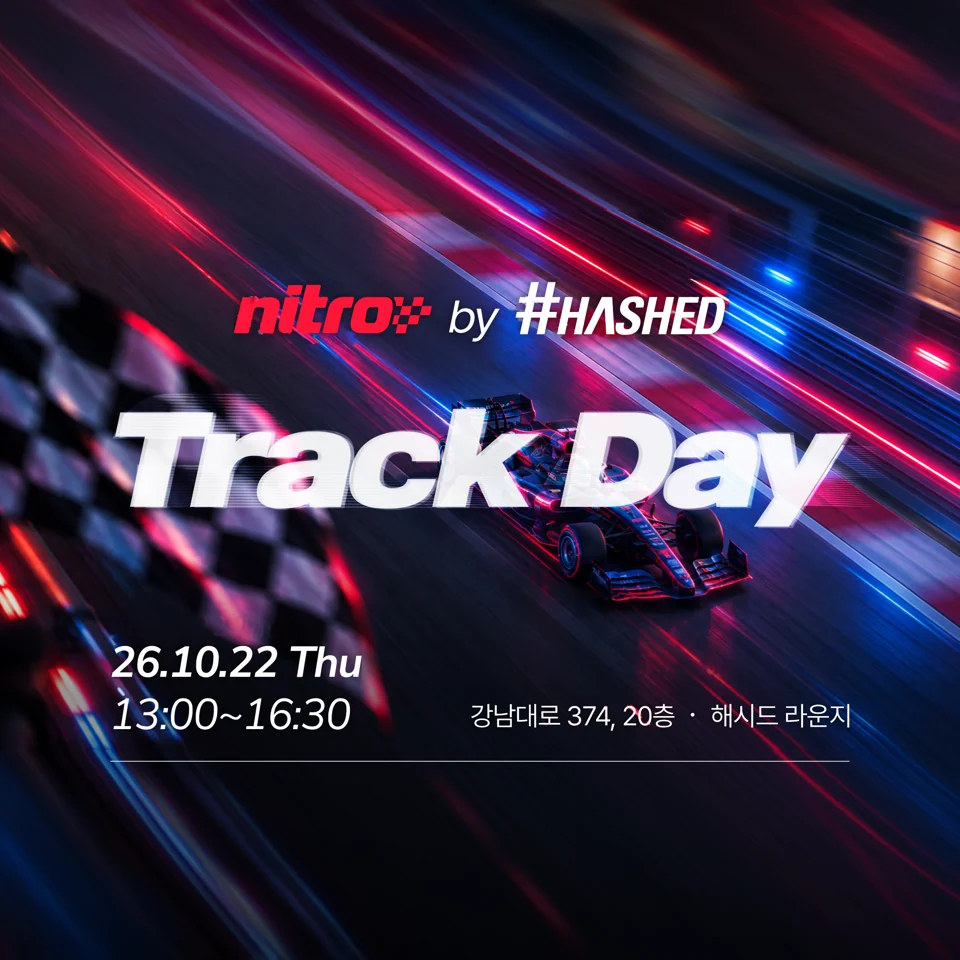
Founders, developers and fellows building products with AI gather with Hashed portfolio companies. We talk through the choices each of us made at work: what can be built now, and what still doesn't change. Networking follows the sessions.
Thu, Oct 22 13:00–16:30 KST · Hashed Lounge · 20F, 374 Gangnam-daero, Gangnam-gu, Seoul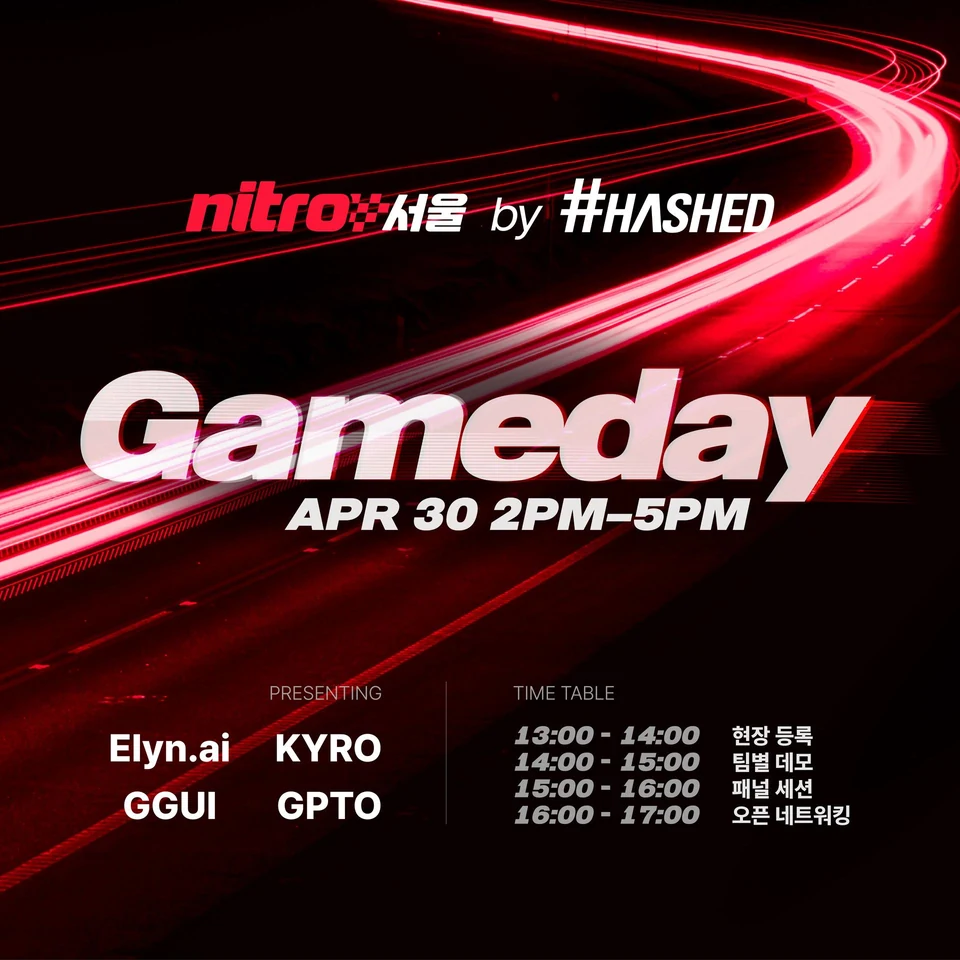
Game Day with live demos of the products built in Seoul Season 1 and builder networking.
14:00–17:00 KST · 20F, 374 Gangnam-daero, Gangnam-gu, Seoul View on Luma ↗
Before the program began, potential applicants met the Hashed team and other builders. It included a program introduction, a panel with Hashed and contributors, and lunch networking.
10:00–13:00 KST · Seoul View on Luma ↗We build Nitro as one team with agents too. We try the ways we recommend to teams on our own work first, and we share openly where we're trying to go.
We apply what we ask of teams to ourselves first. We build the program, the community and the platform ourselves, and keep rebuilding them.
How a question from one meetup leads into the next experiment is something our own team is figuring out hands-on.
We want a community where questions keep going after the event ends, and we're looking for the role agents play within it.
We want to share the ways we've refined in Seoul with builders in more cities. It's still the starting point, which is why we're even more excited.
Nitro is run by Hashed. Hashed works with founders building AI, crypto and frontier tech, with offices in key hubs of the technology supply chain.
When a team that started in Seoul heads for a wider track, Hashed offices in the seven cities below become the pits along the way.
From the day you put your first screen up to the day you head into the next market, the same partner is by your side.
We don't stop at being investors; we join as your second team, shouldering what's needed so founders can focus on growth.
Founders and investors from many continents share their experience at gatherings like Hashed Potato Club.
Global co-investors who have joined the same rounds as Hashed.
 a16z
 Sequoia
 Tiger Global
 USV
 Coatue
 Google Ventures
 Lightspeed
 SoftBank
 Goodwater Capital
 White Star Capital
 Kindred Ventures
 Antler
 Octopus Ventures
 Nyca Partners
 PayPal Ventures
 Makers Fund
 BITKRAFT
 Griffin Gaming Partners
 Animoca Brands
 Multicoin Capital
 Dragonfly
 Polychain Capital
 Electric Capital
 1kx
 Placeholder
 Spartan
 ParaFi
 Race Capital
 Collab+Currency
 Framework Ventures
 Arrington Capital
 CoinFund
 Delphi Digital
 Shima Capital
 Ethereal Ventures
 DCG
 Galaxy Digital
 DeFi Alliance
 ConsenSys
 Coinbase Ventures
 OKX Ventures
 Binance
 Solana Ventures
 Polygon
 Avalanche
Early-stage founders and teams changing how they work with agentic workflows. Headcount isn't a criterion. Solo founders and small teams are welcome.
The community (Paddock) is where anyone can join on Discord and share work and questions. The program (Grid) runs through official announcements and separate selection.
Nitro is a program for early-stage founding teams, so it runs as a separate process from Hashed's main fund investments and moves very fast. What's the same is that Hashed's full global network and resources are connected.
Many of you asked, and we're sorry we couldn't start sooner. Thank you for waiting. Following Seoul Season 1 in H1 2026, we're preparing Seoul Season 2. Dates and terms will be shared through official announcements, first on Discord and Hashed's official social channels.
Not at all. Bring what you're building and the question you're stuck on to the community. We'll think through the next version together.
Hashed Vibe Labs was Nitro's previous name. It started with the Vibe Labs meetup in January 2026, and Seoul Season 1 ran as Nitro in H1 2026.
We're more curious about what's on your screen right now than a business plan. Bring the question you've been wrestling with alone to the pit. We'll look at it together from there.